




plants
4

sales offices
3
employees
380

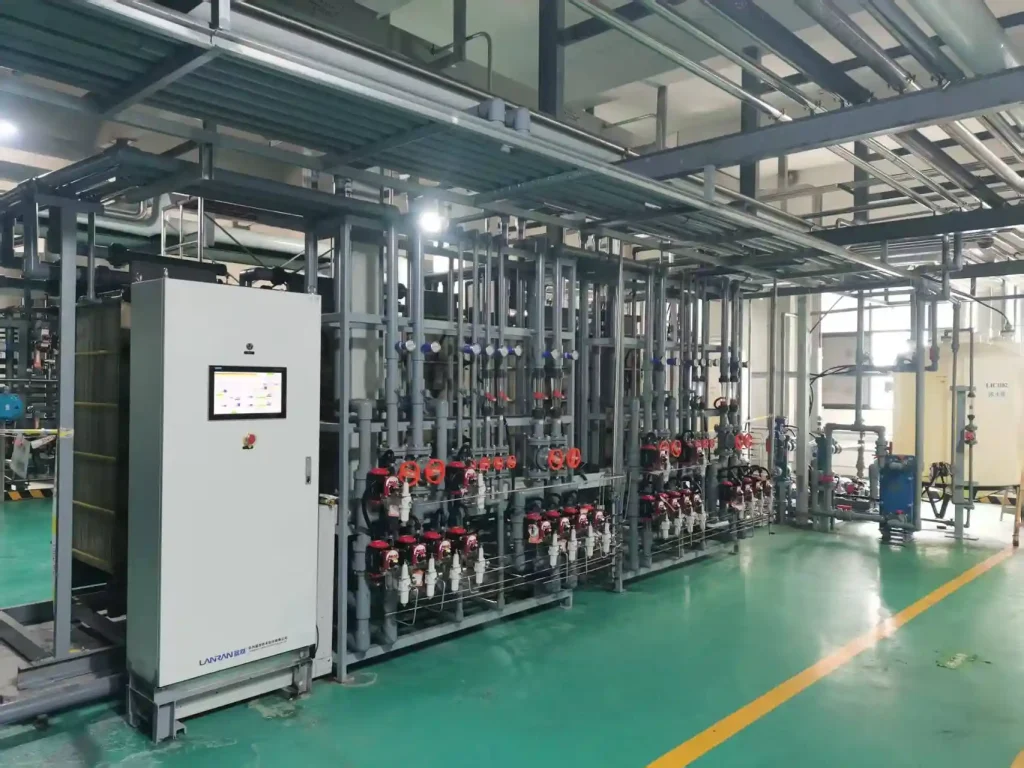
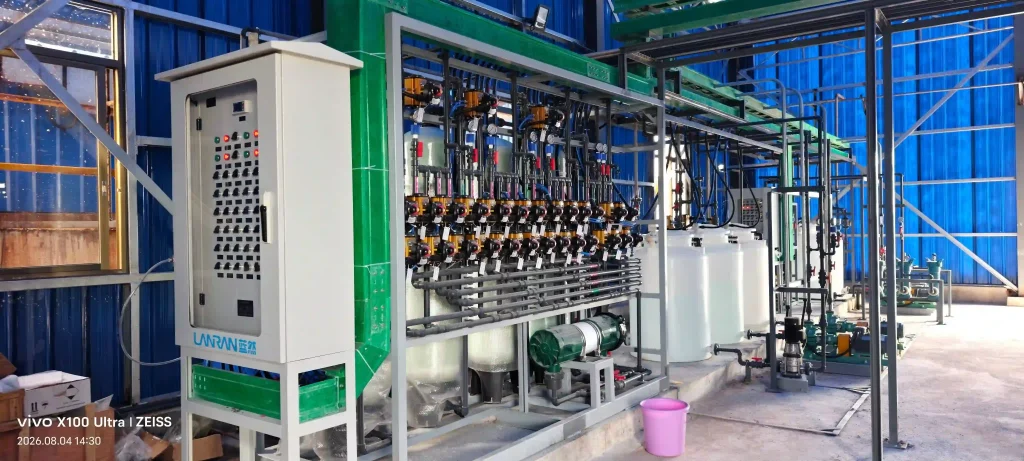
β-Alanine Desalination with LANRAN Two-Stage Electrodialysis
β-Alanine is an amino acid used in applications such as sports nutrition. In its production process, effective desalination is important for meeting downstream processing requirements. Recently, LANRAN partnered with a high-tech pharmaceutical enterprise specializing in functional sugars and sugar alcohols in Quzhou to implement a two-stage Electrodialysis (ED) system for β-alanine solution desalination. The system processes approximately 150 tonnes of β-alanine feed solution per day. Through two-stage electrodialysis and conductivity-based control, the treated solution reaches a conductivity below 900 μS/cm. Integrated pumps, tanks, valves, and instrumentation support automated operation. How LANRAN Adds Value 🔹 Cost and energy optimization — Provides opportunities to optimize operating costs and energy consumption. 🔹 Waste reduction and resource recovery — Supports more effective process stream management and resource utilization, contributing to the goal of reducing waste discharge. 🔹 Product quality and production efficiency — Controlled desalination helps meet downstream process requirements and supports efficient production. 🔹 Long-term competitiveness — Integrates membrane separation technology into the customer’s production process to support ongoing process optimization. By combining two-stage electrodialysis with automated process control, LANRAN delivers a solution tailored to the customer’s β-alanine desalination requirements.
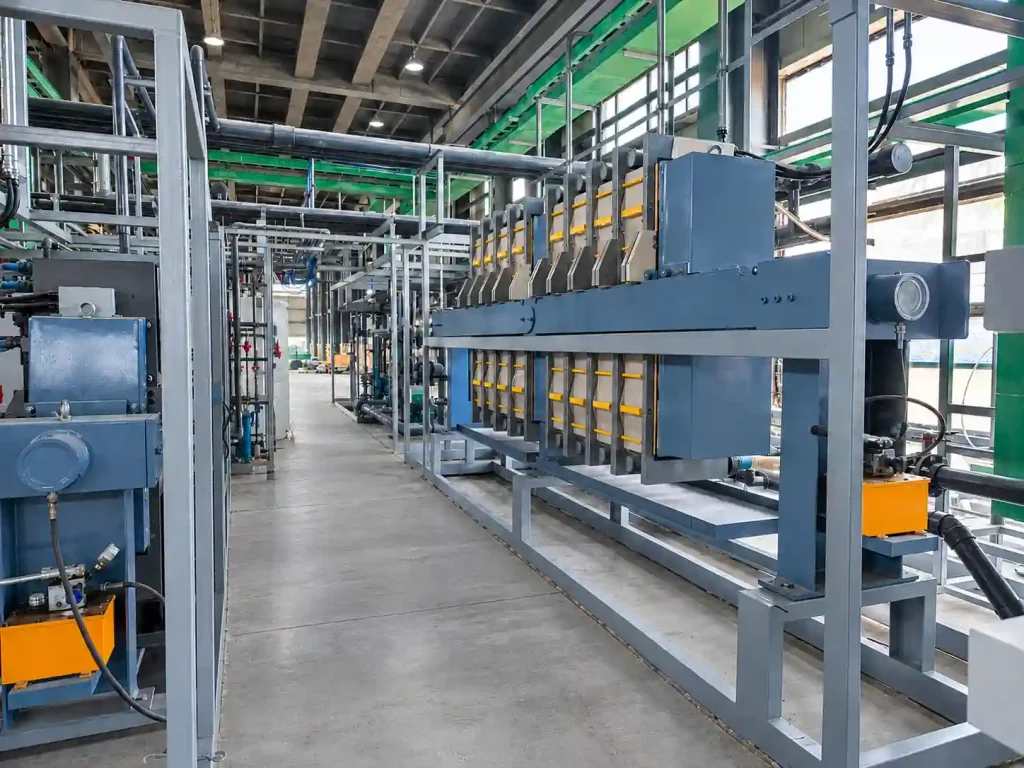
Silica Wastewater Treatment and Sodium Sulfate Recovery with LANRAN BPED Technology
Precipitated silica, also known as white carbon black, is widely used in rubber, plastics, coatings, and toothpaste. Manufacturers typically produce it by reacting sodium silicate with an acid. The process generates wastewater containing residual silica and sodium sulfate, especially during washing. Treating this wastewater creates two key challenges. Manufacturers need to recover water for production reuse and find value in sodium sulfate by-products. Conventional evaporation and crystallization can consume significant energy. Sodium sulfate solids may also have limited reuse options. Meanwhile, fresh sulfuric acid and sodium hydroxide add to operating costs. LANRAN’s Integrated Membrane Solution For a silica wastewater project in Xinjiang, China, LANRAN integrated membrane treatment, electrodialysis (ED), and bipolar membrane electrodialysis (BPED). This process combines water recovery with salt resource utilization. The integrated process includes five key steps: How BPED Technology Creates Value By integrating several membrane processes, LANRAN helps silica manufacturers recover water and turn dissolved salts into useful chemicals. An Industrial Solution for Silica Wastewater With a treatment capacity of 150 m³/h, this project demonstrates how LANRAN combines membrane separation, ED concentration, and BPED technology to address wastewater challenges in silica manufacturing. For silica producers, the integrated solution offers a practical approach to improving water reuse, recovering sodium sulfate resources, and reducing reliance on fresh process chemicals. Looking to recover water and valuable chemicals from silica wastewater? Contact LANRAN to explore membrane-based solutions for silica wastewater treatment, sodium sulfate recovery, and acid–alkali regeneration.
𝐒𝐨𝐝𝐢𝐮𝐦 𝐒𝐮𝐥𝐟𝐚𝐭𝐞 𝐏𝐮𝐫𝐢𝐟𝐢𝐜𝐚𝐭𝐢𝐨𝐧 𝐢𝐧 𝐏𝐮𝐥𝐩 & 𝐏𝐚𝐩𝐞𝐫 𝐔𝐬𝐢𝐧𝐠 𝐁𝐢𝐩𝐨𝐥𝐚𝐫 𝐌𝐞𝐦𝐛𝐫𝐚𝐧𝐞 𝐄𝐥𝐞𝐜𝐭𝐫𝐨𝐝𝐢𝐚𝐥𝐲𝐬𝐢𝐬
In kraft pulp and paper production, chloride and potassium can accumulate in the chemical recovery cycle, increasing the risk of corrosion and scaling and affecting stable operation. For Dingfeng Paper, LANRAN applied Bipolar Membrane Electrodialysis (BPED) to remove part of the accumulated chloride and potassium ions from the sodium sulfate stream. The treatment process includes: Alkali Ash Dissolution → Filter Press → Ultrafiltration → Activated Carbon Adsorption → Ion Exchange → BPED After pretreatment, the BPED process further treats the sodium sulfate stream, with the resulting acid, alkali, and dilute brine streams directed to their respective downstream processes. The recovered alkali is reused within the mill’s chemical recovery and pulping system. This integrated solution helps:🔹 Control chloride and potassium accumulation🔹 Reduce the risk of corrosion and scaling🔹 Support stable operation of the chemical recovery system🔹 Recover and reuse chemical resources🔹 Reduce chemical consumption and wastewater generation By integrating BPED into the chemical recovery process, LANRAN supports more efficient salt management and chemical reuse in pulp & paper production.